HC dismisses writ plea in encroachment case, imposes Rs 50,000 Cost for Suppression of Facts



11/12/2025
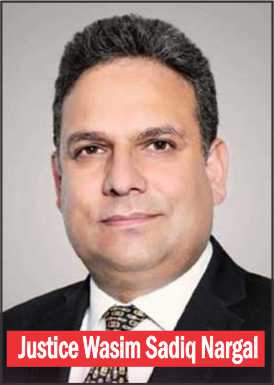
SRINAGAR, Dec 10: The High Court of Jammu & Kashmir and Ladakh at Srinagar has dismissed a writ petition filed by three residents of Surigam, Kupwara, challenging a series of administrative orders on an alleged obstruction of a public pathway, after finding that the petitioners had suppressed crucial facts, including a subsisting restraint order passed by a Civil Court in the same matter. The Court also imposed a cost of Rs 50,000 upon the petitioners for abusing the judicial process.
The judgment was reserved on December 5 and pronounced on December 10, 2025, by Justice Wasim Sadiq Nargal, who observed that the petitioners had approached the writ court "with unclean hands" after having suffered dismissal before both appellate and revisional authorities.
The case concerned allegations that the petitioners had encroached upon and obstructed a public link road constructed by the Rural Devel-opment Department under the 14th Finance Commission Convergence scheme.
The Deputy Commissioner Kupwara, acting on complaints and a spot inspection by revenue officials, had directed removal of obstruction through an order dated April 25, 2024. The petitioners challenged the decision before the Additional Commissioner, Kashmir, and thereafter the Financial Commissioner (Revenue), but remained unsuccessful.
In the writ petition, the petitioners claimed that the land forming part of Khasra No.1660 was their proprietary land. However, official records and reports-including the Tehsildar's findings-showed that the portion of land under obstruction was recorded as Shamilat-deh maqbooza malikan under Khasra No.1673, and not linked with the petitioners' proprietary land.
The judgment notes that a civil suit regarding the same pathway dispute was already pending before the Court of Munsiff, Sogam, in which an interim order dated July 12, 2024 restrained the petitioners from causing any interference or encroachment upon the pathway.
Significantly, the petitioners neither placed that order on record nor disclosed its existence in the writ petition, despite the fact that the said restraint order had been referred to in the orders of the revenue authorities. The Court described this as "deliberate suppression of material facts," intended to mislead the Court and to obtain interim relief indirectly.
Reiterating settled principles of law, the Court held that once civil proceedings on the same subject were pending, revenue authorities ought not to have proceeded, and in fact the petitioners themselves should have pursued their remedies before the competent civil forum rather than invoking writ jurisdiction under Article 226.
The Court also relied on earlier precedent including Abdul Rashid Khan v. UT of J&K (2025), and the Supreme Court judgment in Prestige Lights Ltd. v. State Bank of India (2007), emphasising that suppression of material facts disentitles a litigant from relief under the extraordinary jurisdiction of the High Court.
Holding the writ petition devoid of merit, the Court dismissed it with costs of Rs 50,000, to be paid jointly by the petitioners within two weeks into the Advocates' Welfare Fund. The Registry has been directed to report compliance.
The Court further relegated the petitioners to the Civil Court for adjudication of their grievance, with a direction that the civil court proceed uninfluenced by the High Court's observations, which were confined to the maintainability of the writ petition.
Share This Story |
|
Comment On This Story |
|
|
|
|