HC sets aside order directing compassionate appointment, allows govt appeal



06/03/2026
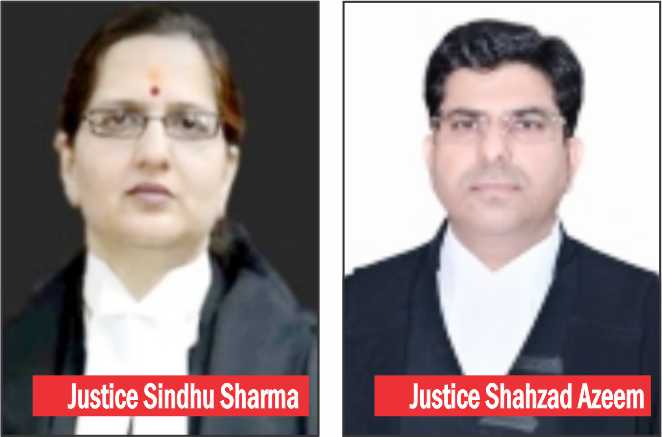
SRINAGAR, Mar 5: The High Court of Jammu & Kashmir and Ladakh has set aside a single judge's order directing compassionate appointment to the son of a deceased prisons department employee, holding that the claim made after more than a decade was time barred under the applicable rules.
A division bench of Justice Sindhu Sharma and Justice Shahzad Azeem allowed the Letters Patent Appeal filed by the Union Territory authorities and quashed the judgment of the writ court which had directed consideration and appointment of Irshad Ahmad Sheikh on compassionate grounds.
The appeal was filed by the UT government through the Principal Secretary, Home Department, along with the Commissioner/Secretary General Administration Department, Director General of Police (Prisons) and Superintendent District Jail, Jammu. Ms Maha Majeed appeared as assisting counsel for the appellants on behalf of Senior Additional Advocate General Mohsin-ul-Showkat Qadri, while none appeared for the respondents.
The case arose after the death of Abdul Rehman Sheikh, a warder in the Prisons Department, who died in harness on June 8, 1998. His son Irshad Ahmad Sheikh applied for compassionate appointment in 2009 after attaining majority. However, the Home Department rejected the claim in 2015 on the ground that the application was not covered under the provisions of the Jammu and Kashmir (Compassionate Appointment) Rules, 1994.
The writ court had earlier quashed the rejection orders and directed the authorities to consider the case for appointment. Challenging the ruling, the government contended that the application was filed nearly 11 years after the death of the employee and was clearly beyond the limitation prescribed under Rule 3 of the 1994 Rules.
The division bench observed that the rules require an eligible family member to acquire the necessary eligibility within one year of the employee's death and apply for compassionate appointment within the stipulated time. Even with the later extension of the period to five years, the claim made after 11 years could not be entertained.
The court also noted that the primary objective of compassionate appointment is to provide immediate financial relief to the family of a deceased government employee, and belated claims defeat that very purpose. If a family manages to sustain itself for a considerable period after the death, it cannot later seek appointment as a matter of right.
Referring to the Supreme Court judgment in Tinku vs State of Haryana (2024), the bench held that compassionate appointment is not a vested right and claims made long after the death of the employee cannot be entertained.
Holding that the writ court had failed to consider the statutory limitation under the 1994 Rules, the bench allowed the appeal, set aside the impugned judgment and dismissed the writ petition filed by the respondents.
Share This Story |
|
Comment On This Story |
|
|
|
|