SC examines Jaipur Udyog dispute; focuses on workers' dues, rival revival bids



16/04/2026
NEW DELHI, Apr 15: The Supreme Court has taken up a decades-old industrial dispute involving Jaipur Udyog Ltd (JUL), focusing on payment of workers' dues and examining competing proposals for revival of the company.
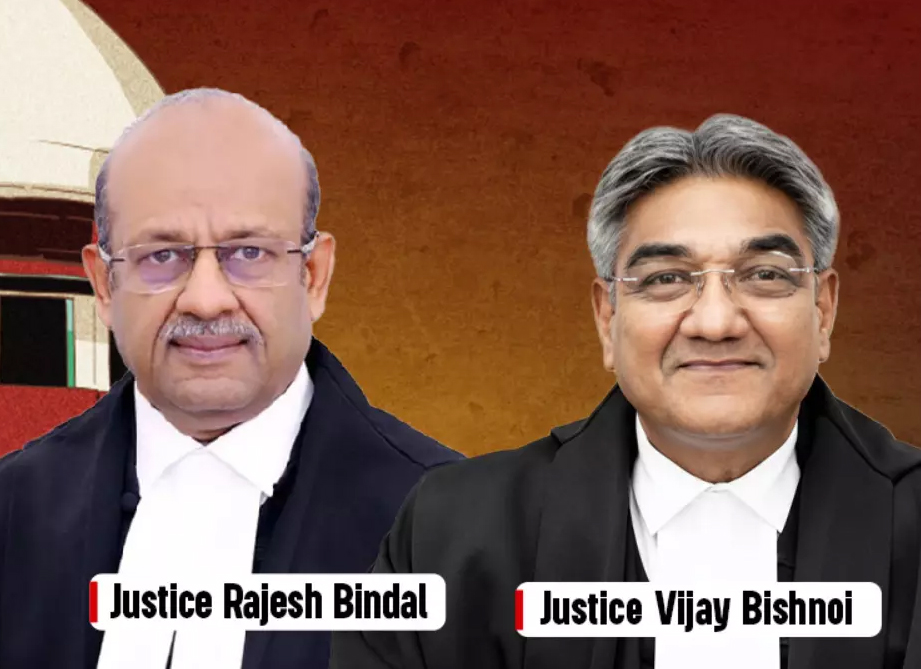
A bench comprising Justice Rajesh Bindal and Justice Vijay Bishnoi passed a detailed judgment after hearing multiple stakeholders, including labour unions, management and prosp-ective investors.
The case arises from a writ petition filed by Bhartiya Mazdoor Sangh and other unions seeking payment of wages and implementation of an award passed in 2008 for workers of JUL and its units, including the Kanpur Jute Mill.
The court noted that JUL had been declared a "sick industry" in 1987 and that repeated attempts at revival had failed, while workers' dues remained unpaid for decades.
Senior advocate Nikhil Goel, appearing for one of the unions, submitted that workers had not been paid for years and argued that the management had no authority to deal with company assets after the winding-up recommendation.
Senior advocate Colin Gonsalves, representing another workers' group, said the primary concern was payment of outstanding dues, estimated at over Rs 100 crore along with interest and provident fund liabilities.
Senior advocate Gopal Sankaranarayanan, appearing for other unions, alleged misuse of control by the management, including unauthorised alteration of shareholding and sale of assets.
On behalf of a prospective investor, senior advocate Krishnan Venugopal placed a rehabilitation proposal offering to clear workers' dues and provide additional benefits.
Senior advocate Vikas Singh, appearing for another group of workers, supported a competing proposal and sought a forensic audit into alleged diversion and undervaluation of company assets.
Opposing these submissions, senior advocate Dhruv Mehta, appearing for Gannon Dunkerley & Co Ltd (GDCL), contended that substantial amounts had already been deposited towards workers' dues and defended the company's role in managing JUL.
Senior advocate Abhishek Manu Singhvi, also appearing for the respondents, argued that the scope of the writ petition should remain confined to payment of wages and cautioned against expanding it to consider fresh revival proposals at a late stage.
The bench observed that the dispute involves complex issues relating to validity of asset sales, status of subsidiary companies and the impact of repeal of the Sick Industrial Companies Act and enactment of the Insolvency and Bankruptcy Code.
Noting that workers have waited for decades for their dues, the court indicated that it may exercise its powers under Article 142 of the Constitution to ensure complete justice and bring finality to the prolonged litigation.
The court is expected to determine the final course of action, including settlement of dues and consideration of revival or liquidation options.
Share This Story |
|
Comment On This Story |
|
|
|
|