CJI Surya Kant flags concerns over accuracy, ethical use of AI in arbitration



26/07/2026
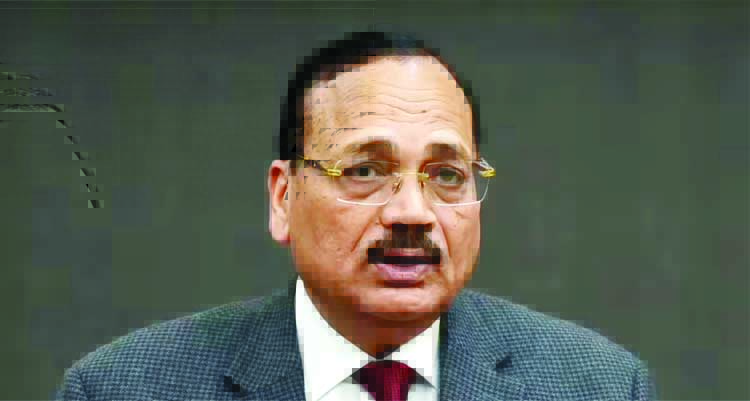
New Delhi, Jul 25: Chief Justice of India Surya Kant on Saturday said that Artificial Intelligence has very quickly moved from the periphery of arbitration practice to its centre and flagged concerns over its accuracy, authenticity and ethical use.
Giving a keynote address at SIAC Annual India Conference-2026 on the topic "International Arbitration: Navigating New Realities and Stress-testing the Fundamentals", the CJI said, "Stress-testing matters only when the fundamentals are worth preserving. I have no hesitation in admitting that in international arbitration, the foundations have remained sound."
On the question of AI, he said it is set to play an increasingly significant role in international arbitration, but its promise is accompanied by genuine concerns, and the worry is not misplaced.
"AI has moved from the edges of arbitration practice to its centre, and it has done so very quickly," he said, adding, "Questions of accuracy, authenticity, and the ethical use of AI are no longer theoretical; they are practical challenges confronting arbitrators, counsel, and institutions alike".
The CJI pointed out that deepfake evidence, witness statements written by AI and submissions drafted entirely by a generative tool, without any disclosure, exist.
"These are not hypothetical risks anymore, and our tribunals need real tools to deal with them," he said, suggesting that there should be a disclosure whenever generative AI has been used in preparing a witness statement or an expert report.
He said this is neither burdensome nor new because "we already expect experts to disclose matters that bear upon the reliability and independence of their opinions".
"Disclosure of AI assistance is simply an extension of that principle, and it only promotes transparency without discouraging innovation," CJI Kant said, adding that institutions such as Singapore International Arbitration Centre are taking the lead in developing common protocols to verify the authenticity of digital evidence.
CJI flagged that no arbitral tribunal should be left to devise its own approach to deepfakes or AI-generated material, and shared standards will only bring greater consistency, reduce uncertainty, and strengthen confidence in the arbitral process.
He said that his third suggestion on AI may not please everybody as, "we should actively embrace AI where it genuinely adds value. Tasks such as e-discovery, document management, translation, and preparing first drafts of procedural orders are well-suited to AI-assisted tools. Used responsibly, they can reduce costs and improve efficiency". Highlighting several other issues, he asserted that arbitration principles such as timely resolution of disputes, confidentiality, and consistency need to be preserved.
"Rules alone cannot fix problems of behaviour. Technology alone cannot fix problems of legitimacy. What arbitration needs today is not another generation of new procedures for their own sake. It needs the discipline to use the tools we already have, and enough judicial humility to let arbitration do the job the parties actually asked it to do," he said.
Kant, in his closing remarks, said arbitration has never stood still, and as it began as a merchant's shortcut around slow admiralty courts, it grew into the backbone of international trade after the Second World War.
"It took on investment disputes after decolonisation. And today, it is taking on artificial intelligence, climate disputes, and questions about digital evidence that its founders could never have imagined," he said.
The CJI added that arbitration's greatest strength has always been its ability to change without losing what makes it what it is: neutrality, party autonomy, and an enforceable result. "Our task, as judges, arbitrators and counsel, is simple. As we adapt, we must not forget why parties chose this path in the first place," he said.
Share This Story |
|
Comment On This Story |
|
|
|
|