Article 370 challenge fails as HC upholds BOCW cess in J&K



Contractors liable to pay cess on works after July 31, 2007; unpaid amount recoverable with 6% interest
09/09/2026
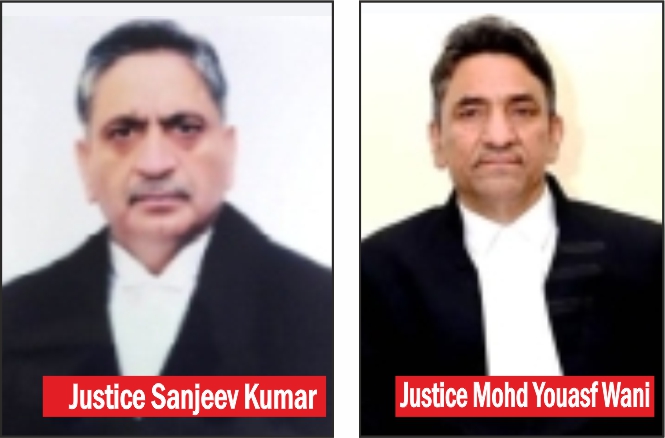
JAMMU, Sep 8: The High Court of Jammu & Kashmir and Ladakh has upheld the constitutional validity of the Building and Other Construction Workers (Regulation of Employment and Conditions of Service) Act, 1996, the BOCW Welfare Cess Act, 1996 and the corresponding Cess Rules, rejecting a challenge to their application in the erstwhile State of Jammu and Kashmir on grounds relating to Article 370.
A Division Bench comprising Acting Chief Justice Sanjeev Kumar and Justice Mohd Yousuf Wani passed the judgment in two connected petitions filed by R.G. Buildwell Engineers Ltd. and Valeecha Engineering Ltd.
The petitioners had questioned Parliament's legislative competence to enact and apply the BOCW legislation and the Welfare Cess Act to the erstwhile State, contending that the special constitutional arrangement under Article 370 restricted Parliament's residuary legislative powers.
The dispute arose after the J&K Economic Reconstruction Agency began deducting one per cent cess from contractors' bills. The petitioners contended that the levy was in the nature of a tax and could not be imposed by Parliament under the constitutional framework then applicable to Jammu and Kashmir.
Rejecting the challenge, the High Court held that the levy under the Cess Act was a fee and not a tax, relying on the Supreme Court's judgment in Dewan Chand Builders & Contractors v. Union of India.
The Bench observed that the amount collected was specifically intended to augment the welfare fund for building and construction workers and was not intended to form part of the Government's general revenue.
The court further held that although Article 248 read with Entry 97 of the Union List, as applicable to the erstwhile J&K, could not by itself confer legislative competence on Parliament to enact the Cess Act for the State, the legislation could validly be traced to Entries 23 and 24 of the Concurrent List dealing with labour welfare and social security.
Examining the legislation in its "pith and substance", the Bench held that the Cess Act was not merely a revenue-collection measure but an integral part of the statutory framework created for the welfare of construction workers.
The court consequently held that Parliament was competent to enact the legislation under Article 246 read with Entries 23 and 24 of List III and found the challenge to the constitutional validity of the Cess Act without merit.
On the question of the date from which the cess could be recovered in Jammu and Kashmir, the High Court noted that the J&K Building and Other Construction Workers Welfare Board was constituted on July 31, 2007.
It held that the statutory mechanism could not have been effectively implemented before the constitution of the Board. However, contractors became liable to pay the prescribed cess from August 1, 2007, irrespective of whether the levy had been factored into their bid prices.
Disposing of both petitions, the High Court declared the BOCW Act, Welfare Cess Act and the 1998 Cess Rules constitutionally valid.
It further held that cess payable on contracts arising from NITs issued after July 31, 2007 could be recovered from the petitioners along with interest at six per cent per annum from the date the amount became due until its recovery.
Share This Story |
|
Comment On This Story |
|
|
|
|