HC quashes drug prosecution against Maxmed Life Sciences, holds statutory right to re-analysis cannot be defeated by reference to NABL laboratory



25/09/2026
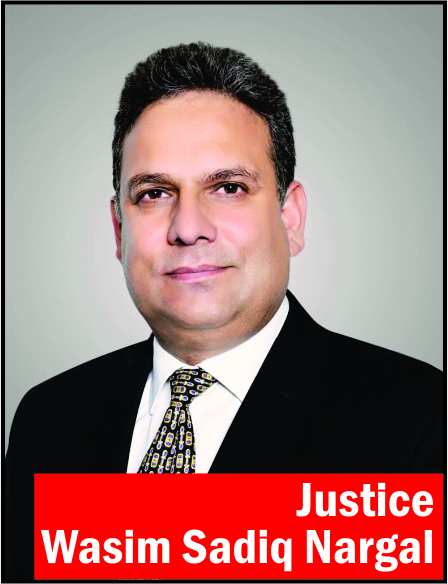
Jammu, Sep 24: The High Court of Jammu & Kashmir and Ladakh has quashed criminal proceedings pending against Maxmed Life Sciences Pvt Ltd and its directors in connection with a disputed drug sample, holding that a manufacturer's statutory right to controvert a Government Analyst's report and seek re-analysis cannot be treated as waived merely because its communication referred to an NABL-accredited laboratory instead of specifically naming the Central Drugs Laboratory.
Justice Wasim Sadiq Nargal passed the judgment in CRMC No. 17/2017 and connected CrlM (1746/2020) and IA (1/2017), after examining the statutory safeguards available under Sections 25(3) and 25(4) of the Drugs and Cosmetics Act, 1940. The judgment was reserved on September 10 and pronounced on September 22, 2026. The petitioners -- Maxmed Life Sciences Pvt Ltd, its director Sanjeev Wasan and Kulbushan Kumar Wasan -- were represented by Advocate Varut Gupta, while the State was represented by AAG Raman Sharma, assisted by Advocate Salika Sheikh.
The case originated from the lifting of a sample of the drug "Amzone" from the premises of Chest and Disease Hospital, Bakshi Nagar, Jammu, on January 16, 2014. The drug carried batch number MLI-386, was manufactured in December 2013 and had an expiry date of November 2015. The sample was sent to the Government Analyst, Jammu, for examination. In a report dated February 11, 2014, the Analyst declared the drug "Not of Standard Quality" on the ground that it had failed the test for particulate matter.
The company disputed the report and communicated its intention to have the sample re-analysed. The petitioners contended that their response was made within the statutory period of 28 days prescribed under Section 25(3) of the Act and that the statutory mechanism for further examination of the sample was consequently attracted.
The petitioners further infor-med the authorities that control samples of the drug had been tested at their in-house laboratory as well as a Government-appr-oved laboratory and were found to conform to the prescribed standards. The competent authority subsequently granted prosecution permission and also permitted re-analysis/ re-testing under Section 25(4) of the Act.
A principal issue before the High Court was whether the petitioners lost their statutory right merely because, in their communication, they had referred to re-testing by an NABL-accredited laboratory instead of specifically mentioning the Central Drugs Laboratory.
The Court answered the issue in favour of the petitioners.
Justice Nargal held that the substance of the communication was that the petitioners had disputed the Government Analyst's report and intended to adduce evidence in controversion of it. Once such intention was communicated within the prescribed 28-day period, the statutory safeguard under Section 25(3) stood attracted and the procedure contemplated under Section 25(4) became available.
The Court specifically held that the reference to an "NABL-accredited laboratory" could not, by itself, be treated as a waiver or abandonment of the statutory right to re-analysis. It observed that the subsequent procedure for obtaining a conclusive report was governed by Section 25(4), rather than by the particular terminology used by the petitioners in their communication.
The High Court also took note of the fact that the sample was not sent to the Central Drugs Laboratory before the expiry of its shelf life. The drug expired in November 2015, whereas the petitioners received summons in the criminal proceedings only in November 2016. The Court found that by then the statutory remedy of meaningful re-analysis had become unavailable.
The judgment emphasised that the right provided under Sections 25(3) and 25(4) is a substantive statutory safeguard. The Court held that once the petitioners had timely disputed the Government Analyst's report, the report could not regain its conclusiveness merely because the sample subsequently lost its shelf life.
The Court further observed that allowing the prosecution to continue solely on the basis of the disputed Government Analyst's report, after the opportunity for statutory re-analysis had been lost, would cause substantive prejudice to the petitioners.
The Court also relied upon precedents of the Supreme Court dealing with the importance of the statutory right to have a disputed sample examined by the designated superior laboratory. It noted that the statutory mechanism is intended to provide an effective safeguard to a person seeking to controvert the Government Analyst's report.
In its concluding findings, the High Court held that the petitioners had duly disputed the Government Analyst's report within the prescribed period and had communicated their intention to controvert it. The Court said they could not be deprived of the statutory safeguard merely because their communication referred to an NABL-accredited laboratory rather than specifically naming the Central Drugs Laboratory.
The Court further noted that the competent authority was aware of the petitioners' intention to controvert the report and had itself permitted re-analysis/re-testing under Section 25(4), but the sample was not sent to the Central Drugs Laboratory before expiry of its shelf life.
Consequently, the High Court held that continuation of the proceedings would cause manifest prejudice to the petitioners and amount to permitting the prosecution to proceed without the statutory safeguard available to them. The Court accordingly allowed the petition, dismissed the complaint titled State through Drug Inspector, Jammu v. Hussain Brothers and Ors. insofar as the present petitioners were concerned, and quashed all consequential proceedings arising from it.
The judgment was pronounced by Justice Wasim Sadiq Nargal on September 22, 2026.
Share This Story |
|
Comment On This Story |
|
|
|
|