CJI announces virtual Supreme Court access for Leh, Kargil lawyers; Ladakh Bench to function as paperless court



19/10/2026
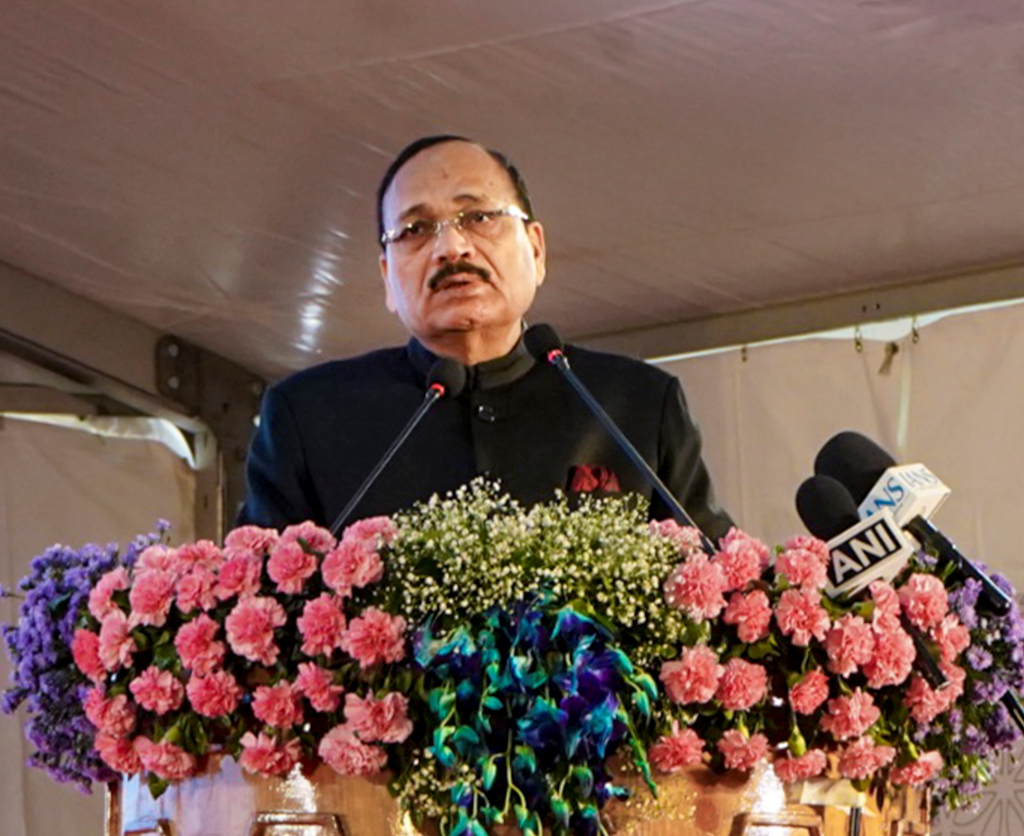
LEH, Oct 18: In a major step towards strengthening access to justice in Ladakh, Chief Justice of India Justice Surya Kant on Sunday announced that lawyers from Leh and Kargil would soon be able to argue cases before the Supreme Court virtually from the newly inaugurated Ladakh Bench of the High Court of Jammu & Kashmir and Ladakh.
Under the proposed arrangement, matters originating from Ladakh will be listed on a designated day and heard through video-conferencing, enabling lawyers and litigants to access the country's highest court without undertaking expensive and time-consuming journeys to New Delhi.
The announcement came as Justice Surya Kant inaugurated the Ladakh Bench at Melongthang in Leh, marking a significant milestone in bringing judicial institutions closer to people living in remote and geographically challenging areas of the Union Territory.
Emphasising the transformative role of technology, the CJI said the initiative would help ensure that geographical distance no longer prevents the people of Ladakh from approaching the highest court of the country.
"In a land of such vast distances, technology can do what no road ever could," he observed, highlighting the importance of technology and legal aid in overcoming the region's unique geographical challenges.
The CJI said the Bench belonged equally to Leh and Kargil and that its purpose would be fulfilled only when people across every corner of Ladakh developed a sense of ownership over the institution.
Reflecting on the region's judicial history, Justice Surya Kant referred to the establishment of a Special Court in Leh in 1870 and noted that difficult terrain, snowfall and the closure of mountain passes had historically restricted access to justice.
He observed that although Ladakh's name was incorporated into the title of the High Court after the region became a Union Territory in 2019, the practical benefits of having a nearby judicial institution remained limited until the establishment of the new Bench.
"A name on a court's letterhead is not the same as a court at one's doorstep," the CJI said, underlining the importance of making judicial services accessible to ordinary citizens.
He added that the true measure of a court was not its geographical elevation but how close it stood to the people it served.
Ladakh Bench to operate as a paperless court
The newly established Bench will function as a fully IT-enabled, paperless court, equipped with modern digital infrastructure to facilitate efficient and accessible judicial proceedings.
During the inauguration, the CJI launched several digital and environmental initiatives, including the e-Filing Portal, Document Management System (DMS), Online Recruitment Portal and Green Wall initiative.
The e-Filing Portal will enable advocates and litigants, particularly those residing in remote areas, to file cases electronically without travelling to the court. The Document Management System will facilitate digital preservation and management of judicial records, while the Online Recruitment Portal is intended to make recruitment in the High Court and district judiciary more transparent, accessible and efficient.
The court complex also houses a dedicated Digitisation Centre, Filing Counter, Bar Room, Litigants' Sitting Area, Conference Room and Video Conferencing Room to support technology-driven judicial functioning.
The CJI also initiated work for the installation of solar power systems at 11 locations, reinforcing the judiciary's commitment to renewable energy and environmentally sustainable infrastructure.
Legal aid to reach remote villages
Justice Surya Kant stressed that technology alone would not be sufficient to ensure justice unless accompanied by effective legal aid and widespread awareness of constitutional rights.
He called for legal awareness camps, the deployment of para-legal volunteers, affordable legal representation and greater use of Lok Adalats to resolve disputes. He also emphasised the importance of ensuring timely compensation for victims of crime.
The CJI described legal aid as a constitutional commitment to ensuring that poverty or disability does not deprive any citizen of access to justice.
He expressed confidence that the Ladakh Legal Services Authority and the High Court Legal Services Committee would work together to reach people in remote villages who continue to face difficulties in accessing legal remedies.
The objective, he indicated, should be to take legal assistance to the litigant's doorstep rather than expect every person to travel long distances to seek help.
Justice Surya Kant also highlighted the importance of nurturing local talent and expanding opportunities for young people in the legal profession. Referring to a child studying in a classroom in Kargil or Nubra, he expressed hope that one day such a student could argue a case before the court or even become a judge.
The inauguration ceremony was attended by Supreme Court Judges Justice M. M. Sundresh and Justice P. S. Narasimha, Chief Justice of the High Court of Jammu & Kashmir and Ladakh Dr. Justice Pushpendra Singh Bhati, Lieutenant Governor of Ladakh Vinai Kumar Saxena, Attorney General of India R. Venkataramani, and High Court Judges Justice Arun Palli, Justice Sanjeev Kumar, Justice Sindhu Sharma and Justice Rajnesh Oswal, among other dignitaries.
The establishment of the Ladakh Bench, coupled with virtual access to the Supreme Court, digital filing facilities and expanded legal aid, marks an important step towards reducing the barriers created by distance, harsh weather and difficult terrain.
The long-term success of these initiatives will depend on their effective implementation and their ability to ensure that residents of Leh, Kargil and far-flung villages can access timely, affordable and meaningful justice.
Share This Story |
|
Comment On This Story |
|
|
|
|